


The holiday season brings more online purchases, delivery notifications, and account activity. That gives scammers more opportunities to send messages that seem timely or familiar.
Before the season gets busy, take a few minutes to strengthen your online accounts and review the warning signs of fraud. As America marked its 250th anniversary, Cybersecurity Awareness Month 2026 is focused on “Securing the Next 250”—a reminder that safer digital habits today help protect what comes next. A few security settings, combined with the habit of pausing to verify unexpected requests, can make it much harder for scammers to access your information or money.
7 Ways to Strengthen Your Online Accounts
You may already use some of these safeguards. Reviewing them now can help you find outdated information, unfamiliar activity, or protections that have not yet been turned on.
1. Make every password unique. Use a passkey when one is available. Otherwise, create a long, unique password or passphrase for each account. A passphrase combines several unrelated words into something easy for you to remember but difficult for others to guess.
For example: 5-Disco-Llama-Tacos-At-Midnight!
Avoid information others could find or guess, such as your birthday or pet’s name. A password manager can help you keep track of your passwords.
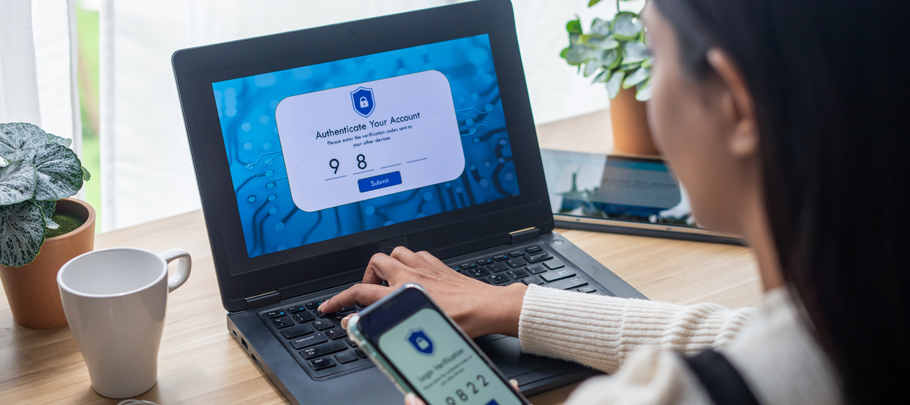
2. Add an extra sign-in step. Turn on multifactor authentication to help protect your account if someone gets your password. Verification codes and approval prompts are for your eyes—and your devices—only. Never share a code or approve a sign-in request you did not initiate.
3. Protect your email account first. Your email can be used to reset passwords for many of your other accounts or find personal information and contacts. Protect it with a unique password or passkey and multifactor authentication. Like your phone number, emails are a part of your personal digital identity.
4. Update your recovery information. Make sure your recovery email address and phone number are current and belong to you. Remove old information you can no longer access.
5. Monitor your accounts and credit. Review recent account activity and the devices connected to your accounts. Sign out of anything you do not recognize and change your password if something looks suspicious. First Mid customers can also use online and mobile banking to set transaction alerts, manage card controls, and access SavvyMoney to view credit score and receive real-time credit alerts.
6. Secure your phone and digital wallet. Protect your phone with a strong passcode, fingerprint, or facial recognition. To keep your digital wallet secure, update your device and apps, enable locate, lock, or erase features, and add cards only through a trusted wallet app or your financial institution’s official app.
7. Pause and verify unexpected requests. Do not click an unexpected link or use the phone number provided in a suspicious message. Open the organization’s official app, type its known website into your browser, or call the number on the back of your card or statement.
Keep Your Accounts and Wallets Safe
Strong security tools can help protect your accounts, but scammers may try to persuade you to bypass them. Learn how to recognize current scams on the rise, like government impersonation scams, before responding to unexpected requests.
We’re here to help you stay safe year-round and stay educated on frequent holiday scams as we head into the season.